By Dr. Sassan Kaveh
In January 1776, Thomas Paine published a 47-page pamphlet that transformed a colonial tax dispute into a war for independence. Common Sense did it with plain language, moral clarity, and an unshakable faith in the ordinary reader — the same three tools every free people needs when its institutions lose their way.
Who Was Thomas Paine — and Why Does He Still Matter?
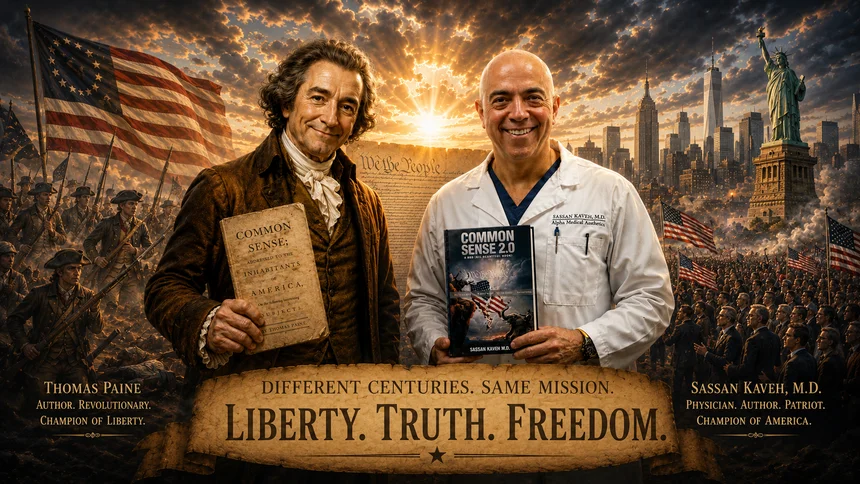
Thomas Paine was not a general, a governor, or a gentleman of property. He was a former corset-maker and excise officer who arrived in Philadelphia from England in late 1774 with little more than a letter of introduction from Benjamin Franklin. Fourteen months later, he wrote the most consequential pamphlet in American history.
That biography is not a footnote. It is the point. The man who made the case for American independence was an ordinary citizen who refused to accept that political judgment belonged to his betters. When I named my own book after his, it was this conviction I wanted to honor: that common sense — the disciplined, plain reasoning of free people — is the foundation on which everything else stands.
A Voice Without a Title
Paine published anonymously at first, signing the work simply “Written by an Englishman.” He took no profit from it, directing proceeds toward the Continental Army. He understood something our credentialed class has forgotten: an argument must stand on its own merits, not on the rank of the person making it. You can read the full text of Common Sense at Project Gutenberg — and I encourage every American to do exactly that.
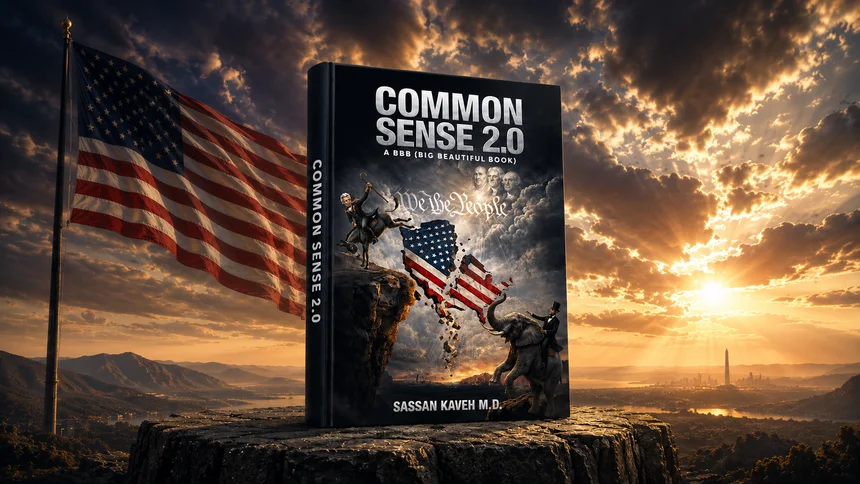
January 1776: When Thomas Paine Lit the Fuse
It is difficult to overstate what Common Sense accomplished. In January 1776, independence was a minority position. Most colonists still considered themselves loyal subjects seeking redress, not revolutionaries seeking separation. Six months later, the Continental Congress adopted the Declaration of Independence.
What changed? By contemporary estimates, hundreds of thousands of copies circulated through the colonies — read aloud in taverns, churches, and army camps to a population of barely two and a half million. Paine did not invent the arguments for independence. He translated them out of the drawing room and into the street.
Plain Words for Plain People
Paine wrote in the cadence of the King James Bible and the tavern, not the legal brief. “The cause of America is in a great measure the cause of all mankind,” he declared on the first page — one sentence, no qualifications, no footnotes. Compare the moment he wrote in to our own:
| The Colonies, 1776 | America, 2026 |
|---|---|
| A distant ruling class claimed the right to govern without consent | An entrenched political class claims the right to manage citizens it no longer trusts |
| Pamphlets and pulpits carried arguments past the official gatekeepers | Independent voices carry arguments past legacy media gatekeepers |
| Loyalty to institutions was mistaken for loyalty to country | Loyalty to party is mistaken for loyalty to country |
| Plain language broke the spell | Plain language is breaking it again |
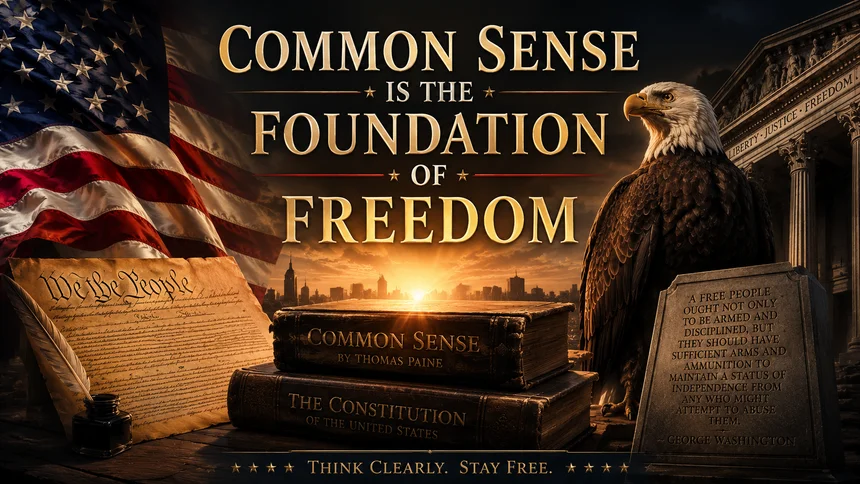
What Thomas Paine Actually Argued
Strip away two and a half centuries of reverence and the argument of Common Sense is startlingly direct. Paine made four claims:
- Government is a necessary evil, not a blessing. Its only legitimate purpose is securing freedom and safety; everything beyond that is appetite.
- Hereditary rule is an absurdity. No man is born with the right to govern another — an argument that applies with equal force to hereditary political dynasties today.
- Small islands do not govern continents. America’s destiny could not be administered from London — nor, I would add, can a continental republic be administered by a single capital city that holds its citizens in contempt.
- The moment matters. “We have it in our power to begin the world over again,” he wrote. Delay was not prudence; it was surrender on an installment plan.
The Quote Everyone Gets Wrong
“These are the times that try men’s souls” does not appear in Common Sense. Paine wrote it the following December in The American Crisis, as Washington’s army dissolved in the snows of New Jersey. I note this not as pedantry but as method: a citizenry that cannot get its founding texts right will not notice when those texts are taken from them. Verify everything — including me.
My Debt to Thomas Paine
I did not come to Paine as an academic exercise. I came to him as a man who had watched a nation collapse from the inside.
I have lived through a country’s unraveling once — the slogans, the purges, the disappearance of plain truth from public life. When I finally read Common Sense as a new American, I recognized the antidote immediately. Paine trusted ordinary people with the truth. Tyrannies, without exception, do not.
As a physician with more than three decades of clinical experience, I learned that an accurate diagnosis delivered in plain language saves lives, and a comfortable euphemism costs them. Paine practiced the same medicine on the body politic. That is the discipline I have tried to carry into my own commentary on the present political moment — and the reason I wrote a book rather than a slogan.
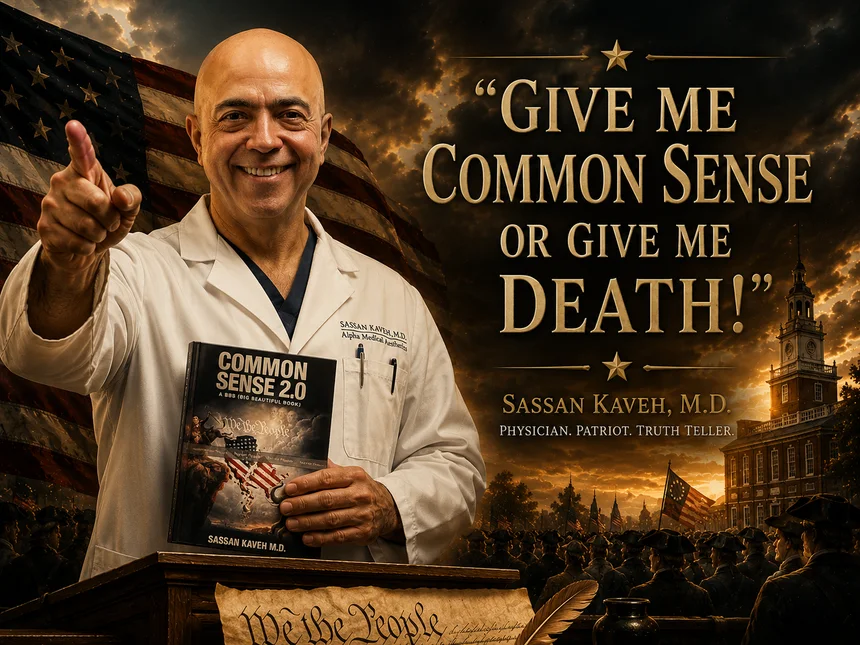
What Common Sense 2.0 Examines — and an Invitation
Common Sense 2.0 — A BBB (Big Beautiful Book) is my attempt to do for this American moment what Paine did for his: lay out, in plain language, how we arrived here and what self-government now requires of us. It examines the patterns I have documented in essays like The Most Dangerous Video in America and my examination of the Reconstruction Era — and traces them back to first principles the Founders would recognize. You can learn more about the project on the About page, or order Common Sense 2.0 on Amazon today.
Join our community of patriots through the newsletter at the bottom of this page — and read Paine first if you must choose. He needs no introduction from me. He needs only readers.
Thomas Paine trusted the people with the truth, and the people made a nation of it. Common sense, once awakened, rarely consents to sleep again.