By Dr. Sassan Kaveh
Self-reliance is the load-bearing virtue of the American republic: the Constitution assumes citizens competent to run their own lives, and no structure of limited government survives the loss of that competence. Rebuilding self-reliance is therefore not nostalgia — it is constitutional maintenance.
There is a virtue at the heart of the American republic, and it is not bravery, or generosity, or even patriotism. It is self-reliance. The man who can support his own family, defend his own home, educate his own children, and form his own judgment is the citizen the Founders designed this republic for. The man who depends on the state for those things is not the citizen the Founders designed for. He is something else — and the something else is incompatible with limited self-government.
This is not a moral judgment about any individual person. Hard times come, illness arrives, fortunes change. A serious republic has compassion for the citizen who falls. The question is structural: what kind of citizen does the system assume it is governing? The Constitution assumed a self-reliant citizenry capable of governing itself. To the extent that we have replaced that citizenry with a managed one, we have changed the regime.

What Self-reliance Actually Means
Self-reliance does not mean isolation. The Founders were not survivalists. They lived in communities, attended churches, served in militias, joined mutual aid societies. Tocqueville, observing American life in 1831, was struck not by Americans' individualism but by their genius for forming voluntary associations. The American character was not the lone frontiersman. It was the frontiersman who built a barn raising with twenty neighbors.
Self-reliance, properly understood, meant something specific: the citizen takes primary responsibility for his own life, his own family, his own household, and his own conscience. He does not look first to the state for solutions to problems that he and his community can solve themselves. The state exists for the genuinely public things — common defense, courts, post offices — not as the first-line solution to private difficulty.

Why The Founders Assumed Self-reliant Citizens
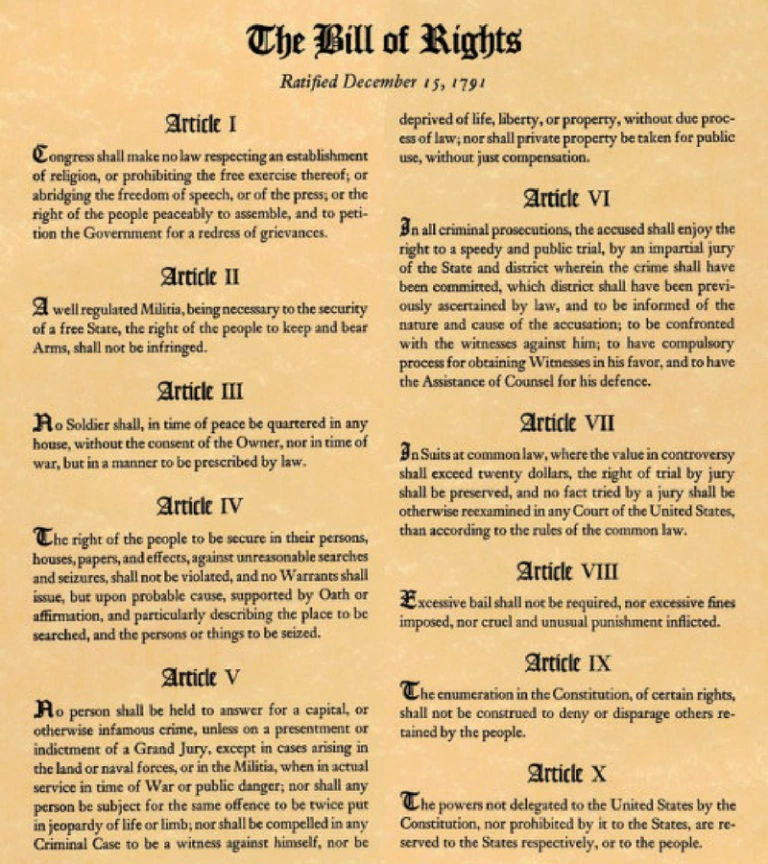
The Constitution is a remarkably brief document. It does not contain a comprehensive theory of social welfare. It does not enumerate a list of services the federal government must provide. It assumed something about the citizenry that did not need to be written down: that ordinary Americans would handle ordinary problems and would only need the federal government for the genuinely federal ones.
This assumption was not naive. It was a sociological fact about the country the Constitution was designed for. The American of 1787 was, by necessity, self-reliant. He had to grow much of his own food, fix much of his own equipment, raise his own children, and pray with his own neighbors. The state was distant and weak. The citizen was, by the standards of any other nation in history, extraordinarily competent at running his own life.
Strip out that competent citizenry and the constitutional structure no longer holds. A republic of dependents is not a republic. It is a clientele.

From Poor Richard To Emerson: A Short History Of An American Virtue
Self-reliance has an American literary lineage older than the republic itself. Benjamin Franklin's Poor Richard's Almanack, published from 1732, made thrift, industry, and self-command into a national curriculum — proverbs drilled into a people who would soon be asked to govern themselves. Franklin's own life was the argument: printer's apprentice to founder, entirely self-taught, the most famous self-made man on earth.
A century later, Ralph Waldo Emerson's 1841 essay "Self-Reliance" gave the virtue its philosophical charter: "Trust thyself: every heart vibrates to that iron string." Emerson's target was conformity — the citizen who outsources his judgment to the crowd, the party, the fashionable opinion. He would have recognized our moment instantly. Tocqueville, observing the same country from outside, saw where the danger would come from: not a tyrant, but a paternal power that "covers the surface of society with a network of small complicated rules" until the citizen forgets how to act for himself — his Democracy in America names the disease we now live with. The American tradition of self-reliance was never rugged isolation. It was the discipline of judgment: think for yourself, provide for your own, and join freely with your neighbors — a thread that runs unbroken from Franklin's almanac to the citizens I described in my essay on the Reconstruction Era, who understood that dependence on the powerful is the oldest leash in politics.
What Rebuilding Actually Looks Like
The recovery is unglamorous and local: cook, fix, and build what you can; keep a family budget that could survive a bad year; teach your children at your own dinner table what schools no longer will; join the church, the lodge, the volunteer brigade; run for the school board. None of this requires permission from Washington — which is precisely the point.
| The Habit | The Self-Reliant Form | The Managed Form |
|---|---|---|
| Feeding a family | A budget, a pantry, a kitchen | Consumption smoothed by transfer payments |
| Raising children | The dinner table, the family library | Outsourced screens and distant curricula |
| Meeting hardship | Savings, kin, congregation, mutual aid | A case number in a federal queue |
| Forming judgment | Primary sources and argument among neighbors | Curated feeds and official narratives |
| Governing locally | School board, township, volunteer brigade | Waiting for the capital to decide |

The Replacement Of Self-reliance With Dependency
The mechanisms of the replacement are familiar: expansion of administrative agencies, growth of transfer payments, regulation of small-scale economic activity, professionalization of childrearing and education, replacement of community institutions with public-sector substitutes. Each step was justified by some real or imagined need. Each step also shifted competence from the citizen to the state.
The cumulative effect is a population that is, on average, less able to run its own life than its great-grandparents were. We are richer than they were. We are also more managed, more permitted, more licensed, and more dependent. The richness is real. So is the dependency. The Founders would not have understood the latter as freedom.
A Doctor's View Of Dependency As Pathology
In rehabilitation medicine, there is a principle: the patient must do as much as the patient is capable of doing. If the system does too much, the patient atrophies. Muscles weaken. Cognition declines. The kindest-seeming approach — taking over for the patient — is the one most likely to produce permanent disability. The same principle applies to nations.
A polity that does too much for its citizens produces civic atrophy. Skills wither. The capacity for collective self-government declines. The citizens become unable to do what their forebears took for granted. This is not a moral failing of the citizens. It is a structural consequence of a system that has chosen, with the best of intentions, to remove the need for self-reliance.
The recovery of self-reliance is therefore the recovery of citizenship itself. It is what I argue, in detail, in Common Sense 2.0: that the American character must be rebuilt at the level of family, neighborhood, and parish before it can be rebuilt at the level of nation.

Get The Book That Goes Deeper
If this essay resonated, my book — Common Sense 2.0 — A BBB (Big Beautiful Book) — examines the founding ideas, the constitutional architecture, and the present moment in greater depth. It is written for readers who believe that self-government requires honest analysis, that power must answer to truth, and that no political party is entitled to blind trust.
Frequently Asked Questions
Isn't Self-reliance Just An Excuse To Abandon People In Need?
No. The Founders' America had robust traditions of charity, mutual aid, and community support — most of it organized through voluntary associations rather than the state. Self-reliance and compassion are not opposed. What is opposed to self-reliance is the substitution of state management for the citizen's own competence.
What About People Who Genuinely Cannot Support Themselves?
The serious answer to this is the historical one: voluntary associations, churches, mutual aid societies, and the family. The state had a role at the margin — for the truly destitute, for veterans, for those without any community at all. The role grew over time. The growth was understandable. Whether it was wise is a question that requires honest re-examination.
Can A Modern Economy Really Run On Self-reliance?
A modern economy depends on specialization and trade — no one builds his own iPhone. Self-reliance in the Founders' sense was never about producing all your own goods. It was about being competent to manage your own life, raise your own family, form your own judgments, and contribute to your own community. None of that has been made obsolete by modernity. We have simply forgotten how to do it.
— Dr. Sassan Kaveh · physician · author · American by choice. Read more at commonsense2point0.com and join our community of patriots.