By Dr. Sassan Kaveh
The lessons of history are not decoration for graduation speeches; they are the closest thing a nation has to a medical chart. Historical pattern is the best indicator of future behavior — and America’s wars, read honestly, form a single repeating pattern: division ignored becomes division armed, weakness invites aggression, and the bill always arrives.
Why the Lessons of History Are the Best Indicator of the Future
In medicine, we do not guess a patient’s future; we read his history. The chart tells you what the body does under stress, what it ignores, what it survives, and what nearly killed it. Three decades of clinical experience have taught me that patients who hide their history from the doctor — or doctors who decline to read it — produce the same outcome: a preventable catastrophe arriving on schedule.
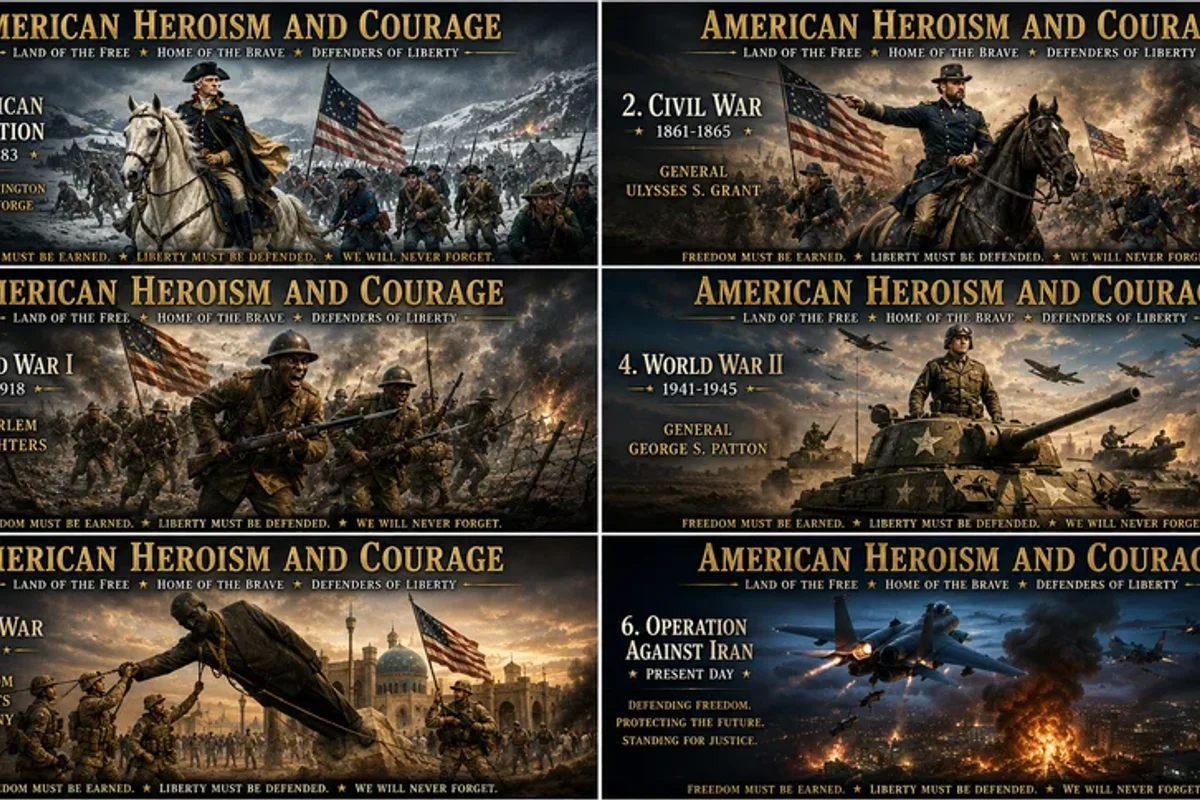
Nations keep charts too. We call them wars. Each one is a stress test that reveals exactly what the body politic had been ignoring in the years before. The National Archives’ military records hold the raw data; the task of a free citizenry is to read the pattern in it. What follows is the chart review.
Brother Against Brother: The Civil War’s Warning
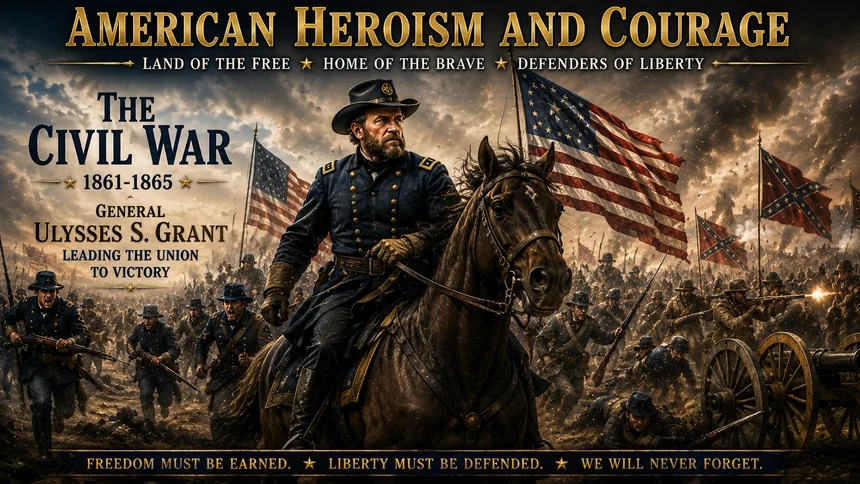
From 1861 to 1865, Americans killed more than 600,000 other Americans — more dead than every other American war combined until the twentieth century. The American Battlefield Trust’s archives document it field by field.
The lesson is not merely that slavery was an abomination, though it was. The lesson is procedural, and it is the one we most need now: for decades, the political class managed the division instead of resolving it. Compromise after compromise postponed the question, each postponement raising the eventual price. By 1861, two halves of one country no longer shared a definition of justice, of law, or of each other’s humanity — and at that point, the arguing was over.
The Diagnostic Rule
A nation that cannot speak honestly about its deepest division will eventually stop speaking and start arming. I documented the modern version of this trajectory in Democrats’ War on America — not because I relish the comparison, but because the chart demands it be made while words can still matter.
The World Wars: When Free Nations Hesitated
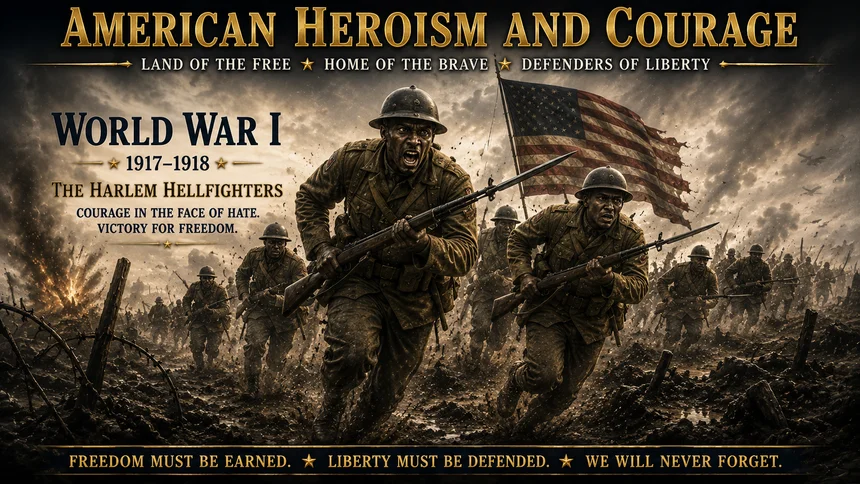
The First World War taught that entangling decay abroad does not stay abroad: America hoped for three years that an ocean was a policy, and then sent two million men into the trenches anyway. The Second World War taught the same lesson at triple the price.
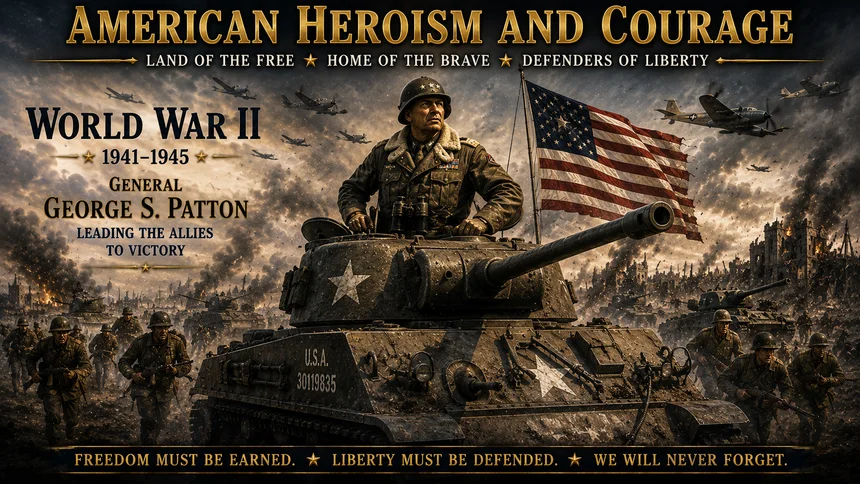
Through the 1930s, the democracies watched a dictatorship rearm, annex, and announce its intentions in print, and answered with conferences. Appeasement did not purchase peace; it financed the enemy’s preparation. By 1945 the butcher’s bill for that decade of wishful thinking exceeded fifty million human beings. Weakness does not de-escalate predators. It schedules them.
Iraq and the Cost of Forgetting
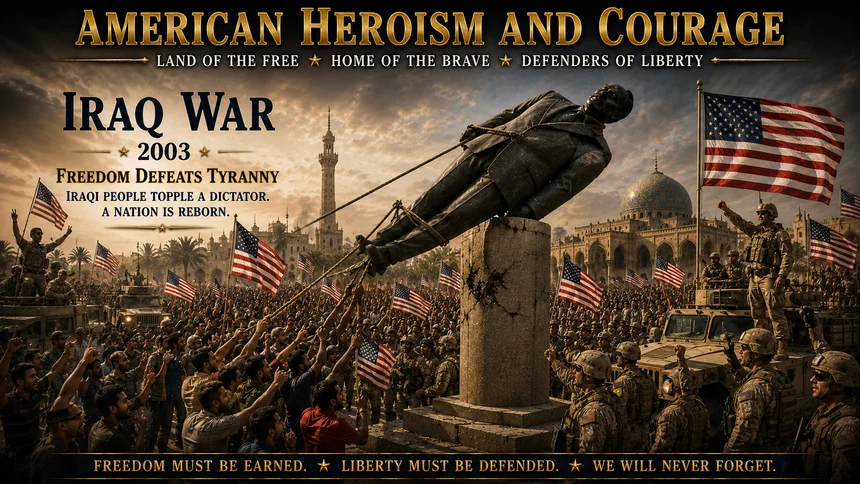
The Iraq War belongs in the chart for a harder reason: it is the lesson about ourselves. America fights well and plans poorly; we win the war in weeks and then improvise the peace for years. The pattern of that conflict repeats three American habits worth naming plainly:
- Confusing capability with strategy. The finest military in history cannot substitute for a clear, limited, honest war aim.
- Trusting intelligence filtered through politics. When analysis is bent toward a preferred conclusion — any preferred conclusion — the soldier pays for the analyst’s career.
- Abandoning the long game. Republics grow bored; their enemies do not. Every premature withdrawal in our history has been an invitation accepted by somebody.
None of this dishonors the men and women who served — it honors them, by insisting their country learn what their sacrifice paid to teach.
The pattern even has a postscript that repeats between the wars: demobilization as amnesia. After 1945, America dismantled the mightiest military in history with astonishing speed, and five years later paid for it on the Korean peninsula, where the first units thrown into the fighting were under-trained, under-equipped, and under-strength — not because the nation lacked means, but because it had decided, once again, that the last war was the last war. Vigilance, it turns out, is not a wartime virtue. It is a peacetime discipline, and it is always the first casualty of victory.
What the Chart Does Not Say
Let me be precise about what this chart review is not. It is not pacifism: the lessons of history are equally clear that some wars must be fought, and that the free world exists because Americans fought them. Nor is it militarism: the same chart shows the price of wars entered carelessly. It is the physician’s middle path — neither denying the disease nor reaching reflexively for the scalpel, but reading the patient’s history honestly before deciding. Nations, like patients, are owed that honesty by the people responsible for their care.
Reading the Pattern — Before It Reads Us
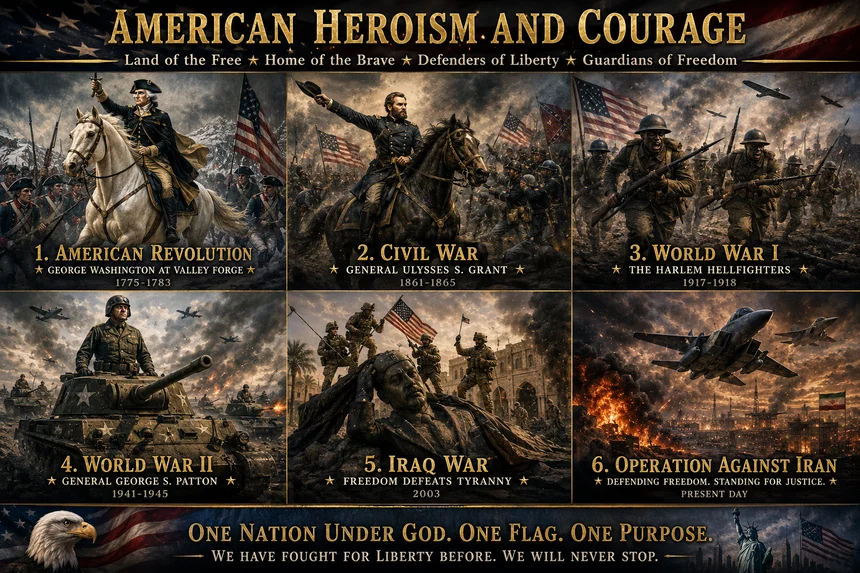
Line the wars up and the lessons of history compose a single sentence: internal division, projected weakness, and willful blindness are the three preconditions of every catastrophe America has ever suffered. Now look around. Which of the three is absent today?
| War | The Precondition | The Lesson |
|---|---|---|
| Civil War | Division managed, never resolved | Postponed reckonings compound at interest |
| World War I | Illusion of distance | Oceans are geography, not policy |
| World War II | Appeasement of an announced enemy | Weakness schedules aggression |
| Iraq | Politicized intelligence, no defined end | Honesty is a weapons system |
This chart review is the heart of Common Sense 2.0 — A BBB (Big Beautiful Book): the historical pattern, read without flinching, and the prescription that follows from it. Order it on Amazon, read the companion essays in The Most Dangerous Video in America and elsewhere on the blog, and join our community of patriots through the newsletter below.
History does not repeat itself out of cruelty. It repeats itself because each generation believes it is exempt. A free people that reads its own chart honestly never has to learn the same lesson twice — and common sense, once awakened, rarely consents to sleep again.