By Dr. Sassan Kaveh
The Bill of Rights does not grant Americans their rights — it forbids the federal government from violating rights the Founders held to pre-exist all government. Ratified in 1791, those ten amendments remain the hardest structural limit on power in the American constitutional order.
When most Americans talk about the Bill of Rights, they speak in vague terms — "free speech," "the right to bear arms," "the police can't just search your house." That conversational summary misses what makes those first ten amendments revolutionary. They were not written to grant rights. They were written to forbid the federal government from violating rights that the Founders believed already existed by nature. The Bill of Rights is the negative space of American government. It defines what power cannot do.
That distinction matters more in 2026 than it did when the amendments were ratified in 1791. We live in an era when administrative agencies, judicial reinterpretations, and cultural pressures routinely test the limits the Founders thought they had drawn in granite. To defend the Bill of Rights, we must first remember what it is — and what it is not.
What The Bill Of Rights Actually Is
The Bill of Rights is the first ten amendments to the United States Constitution, proposed by James Madison and ratified on December 15, 1791. They were demanded by the Anti-Federalists as a precondition for ratification of the Constitution itself. The men who feared a too-powerful central government would not consent to one without explicit, enforceable limits.
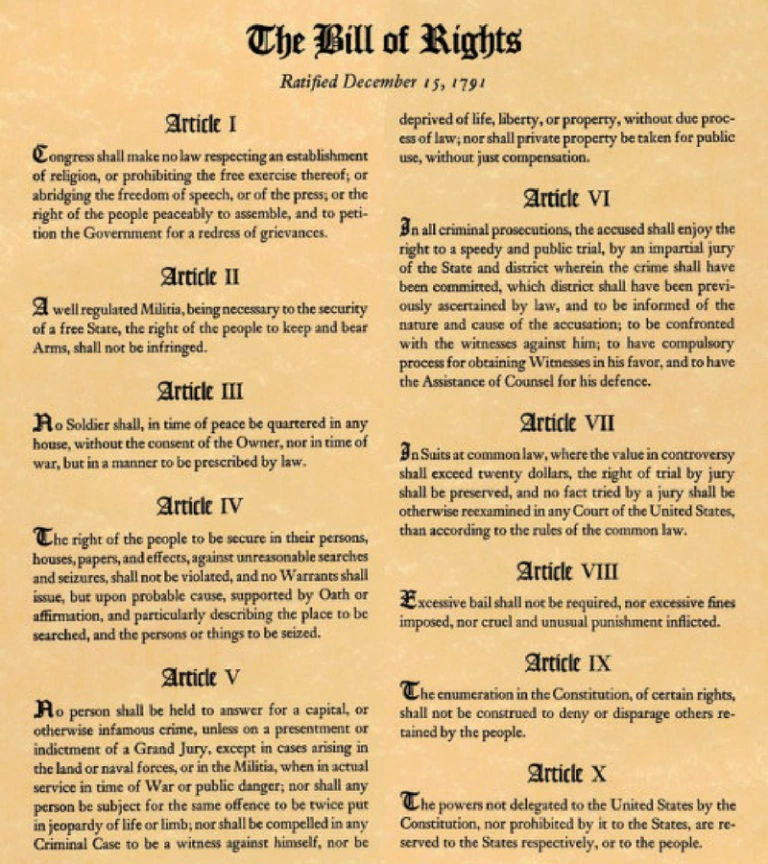
These ten amendments did not invent rights. The First Amendment did not create the freedom of speech; it forbade Congress from abridging a freedom Americans already had. The Fourth Amendment did not create the right to be secure in one's home; it forbade the government from violating a security that English common law had already recognized for centuries. Read the actual text. The verbs are negative: Congress shall make no law… shall not be infringed… shall not be violated… shall not be required… shall not be construed…
You are looking at a document written by men who had recently fought a war against a government that abused its power. They were not in a mood to trust governments.
The First Amendment — Five Freedoms In One Sentence
The most quoted amendment is also the most misunderstood. The First Amendment protects five distinct freedoms, all in a single sentence:
- Freedom of religion (both the free exercise of religion and freedom from a state-established church)
- Freedom of speech
- Freedom of the press
- The right of the people to peaceably assemble
- The right to petition the government for a redress of grievances
Note what is conspicuously absent: any exception for offensive speech, any carve-out for "hate speech," any qualifier permitting censorship of opinions the government finds dangerous. There is no except when clause. The men who wrote that sentence had been publishing what George III considered seditious pamphlets a few years earlier. They knew exactly what they were protecting.
Madison himself doubted that words alone could restrain power — he called such promises "parchment barriers" and warned that majorities, not kings, would be the chief threat to liberty in a republic. That is why the Bill of Rights was never meant to stand alone: it rides on top of the Constitution's structure of separated powers, federalism, and enumerated authority. The amendments name the lines; the structure supplies the resistance when someone tries to cross them. Citizens who quote the First Amendment but cannot describe the structure behind it are defending a fence with no posts. The Founders gave us both, and both require maintenance.
The Amendments Everyone Skips: Two Through Eight
Civic memory tends to jump from the First Amendment straight to a vague sense that "the rest are legal stuff." The middle amendments deserve better. The Second protects the right of the people to keep and bear arms — written by men who had just used privately owned muskets to remove a government. The Third forbids the peacetime quartering of soldiers in private homes, a grievance modern readers skim past but colonists ranked near the top of their complaints against the Crown.
The Fourth requires warrants supported by probable cause before the government may search your person, house, papers, or effects — the amendment most tested in the digital age, when "papers and effects" live on servers. The Fifth and Sixth build the architecture of due process: no self-incrimination, no double jeopardy, grand juries, speedy public trials, confrontation of witnesses, counsel. The Seventh preserves civil jury trials, and the Eighth forbids excessive bail and cruel and unusual punishments. Read together, amendments two through eight are a single design: the state must overcome deliberate friction before it may touch your liberty, your property, or your life. You can read the original engrossed text at the National Archives.
| Amendment | What It Forbids Government From Doing |
|---|---|
| I | Abridging speech, press, religion, assembly, or petition |
| II | Infringing the right of the people to keep and bear arms |
| III | Quartering soldiers in private homes in peacetime |
| IV | Unreasonable searches and seizures; warrants require probable cause |
| V | Denying due process; compelling self-incrimination; double jeopardy; taking property without just compensation |
| VI | Denying a speedy public jury trial, counsel, or confrontation of witnesses |
| VII | Denying jury trial in civil cases |
| VIII | Excessive bail and fines; cruel and unusual punishments |
| IX | Claiming the listed rights are the only rights the people retain |
| X | Exercising powers never delegated — those remain with the states and the people |
The Forgotten Amendments — Ninth And Tenth
Most Americans can name the first four or five amendments. Very few can recite the Ninth or the Tenth, and that is a tragedy of civic education. The Ninth Amendment declares that the enumeration of certain rights in the Constitution "shall not be construed to deny or disparage others retained by the people." Translation: the rights listed are not exhaustive. The Tenth Amendment reserves all powers not delegated to the federal government, nor prohibited to the states, to the states or to the people.
The powers not delegated to the United States by the Constitution, nor prohibited by it to the states, are reserved to the states respectively, or to the people.
Tenth Amendment, U.S. Constitution
Those two amendments are the structural firewall against a federal government that grows by interpreting its own enumerated powers expansively. Every American should be able to recite them. Most cannot. That is by design — by the bureaucratic class, not by the Founders.
History shows what happens when these limits are treated as optional. After the Civil War, Southern governments tested every boundary the amendments drew — and it took the Fourteenth Amendment to extend the Bill of Rights' logic against the states, a story I trace in my essay on the Reconstruction Era. The lesson has not aged: parchment limits hold only when citizens insist on them.
A Physician's View Of Constitutional Health
As a physician with thirty years of clinical experience, I have learned to recognize the early signs of a failing system long before it collapses. A patient who has lost the ability to feel pain is not healing; they are losing the early-warning system that allows healing to happen. A republic that has lost the ability to feel the violation of its own founding limits is in the same condition. The Bill of Rights is the pain receptor of American government. When we cease to notice its violations, we have not become more tolerant. We have become numb.
To understand why the Founders thought these limits mattered enough to enumerate, see my essay on natural rights from Locke to Jefferson and the deeper analysis in Common Sense 2.0.
Get The Book That Goes Deeper
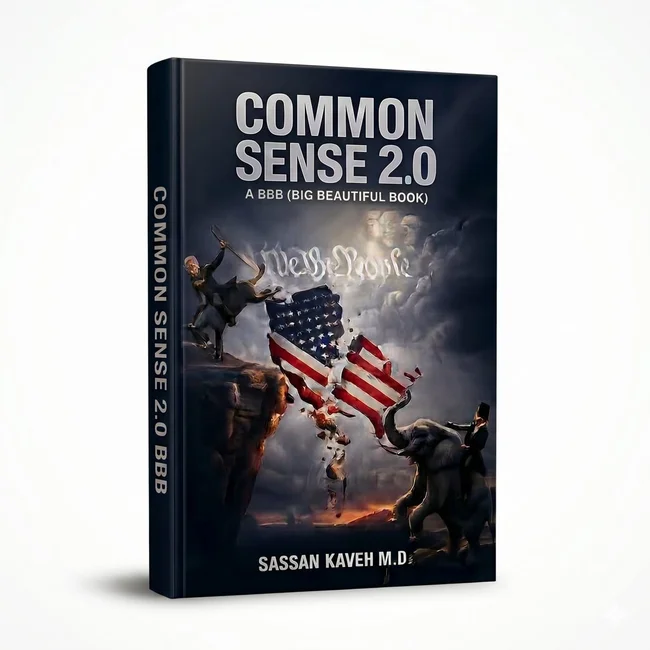
If this essay resonated, my book — Common Sense 2.0 — A BBB (Big Beautiful Book) — examines the founding ideas, the constitutional architecture, and the present moment in greater depth. It is written for readers who believe that self-government requires honest analysis, that power must answer to truth, and that no political party is entitled to blind trust.
Frequently Asked Questions
Are The Rights In The Bill Of Rights Absolute?
The text of the amendments is absolute — they speak in unqualified prohibitions on government. Modern jurisprudence has carved exceptions, some defensible (no shouting fire in a crowded theater) and some not (administrative restrictions on speech the Founders would have found intolerable). Original intent and modern interpretation are not always the same conversation.
Why Are The Ninth And Tenth Amendments So Important?
Because they answer the question the rest of the Constitution leaves open: what about the powers we did not specifically delegate? The Ninth says rights you find here are not the only rights you have. The Tenth says powers we did not delegate to Washington remain with the states and the people. Together they are the architecture of a limited federal government.
Does The Bill Of Rights Apply To State Governments?
Originally, no. It restricted only the federal government. Through the Fourteenth Amendment and a century of incorporation doctrine, most of the Bill of Rights now also restricts the states. Whether incorporation was correctly decided is a question worth its own essay.
— Dr. Sassan Kaveh · physician · author · American by choice. Read more at commonsense2point0.com and join our community of patriots.