By Dr. Sassan Kaveh
George Washington holds a rank no living officer can ever attain. In 1976, Congress posthumously appointed him General of the Armies of the United States and decreed that no officer shall ever outrank him — a six-star general, in effect, forever. The rank was not a reward for the power he seized. It was a monument to the power he refused.
The Man Who Refused a Crown
Every tyranny I have studied — and the one I escaped — begins with a man who convinces himself that the nation cannot survive without him. George Washington is history’s great counterexample. Twice he held more personal power than any American before or since, and twice he handed it back.
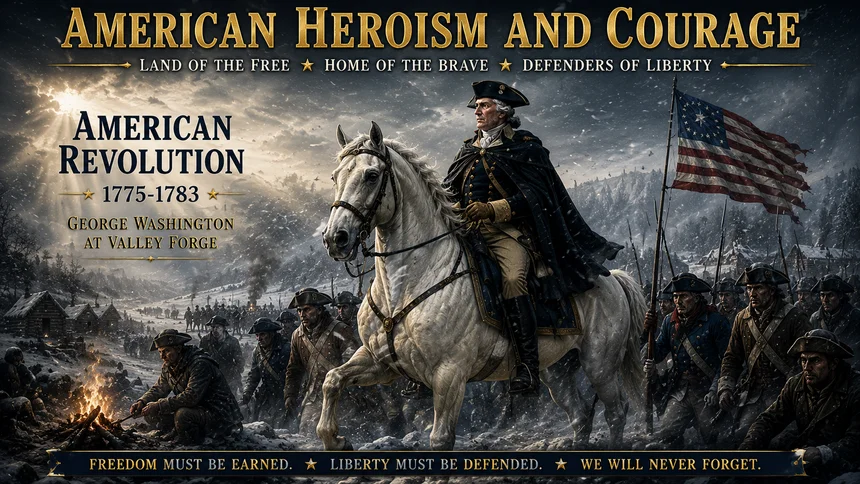
In December 1783, with the war won and his army at his back, Washington rode to Annapolis and resigned his commission to the Continental Congress. King George III, told that Washington intended to surrender power and return to his farm, reportedly remarked that if he did so, he would be the greatest man in the world. He did so.
Thirteen years later he did it again, declining a third term as president when no law required him to leave. The two-term tradition he set held for nearly 150 years — and when it was finally broken, Americans wrote his precedent into the Constitution itself.
The Cincinnatus of the West
His contemporaries understood exactly what they were watching. They called him the Cincinnatus of the West, after the Roman farmer-general who accepted absolute power to save his republic and surrendered it the moment the work was done. The comparison was not flattery; it was relief. Eighteenth-century men knew their history, and their history taught that victorious generals do not go home — they go to the capital. George Washington went home. Twice. Everything else in the American experiment rests on the precedent set by that single, repeated act of self-denial.
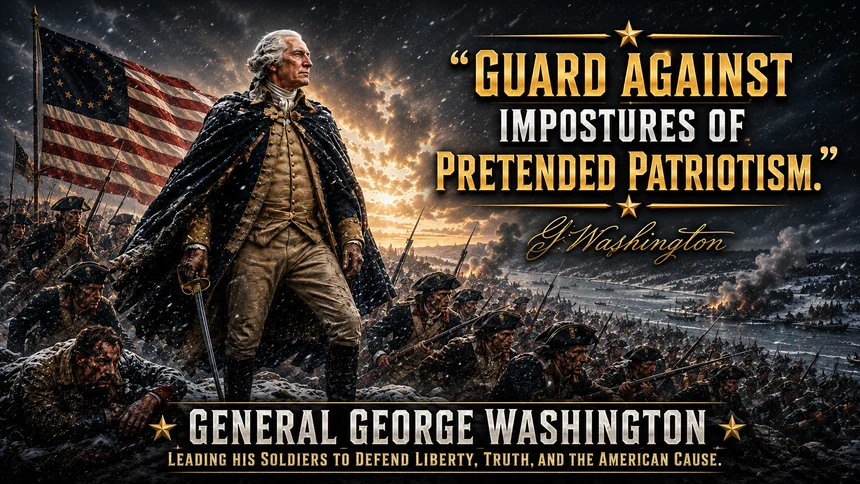
How George Washington Became America’s Only Six-Star General
The story of the rank itself is worth telling precisely, because it is so often told wrong. Washington died in 1799 as a lieutenant general — three stars. Over the following two centuries, the military he founded created ranks above his: four-star generals after the Civil War, five-star Generals of the Army in 1944, and General of the Armies John J. Pershing after the First World War.
Congress found this intolerable. As the nation’s bicentennial approached, it passed Public Law 94-479, and on January 19, 1976, President Ford signed it: George Washington was posthumously appointed General of the Armies of the United States, with the explicit provision that he shall never be outranked by any officer, past or future. The order took effect on July 4, 1976. Whatever stars the future mints, Washington stands above them — the only six-star general America will ever have.
Only one other man has ever held the title General of the Armies in his lifetime: John J. Pershing, honored in 1919 for commanding the American Expeditionary Forces in the First World War. But Congress drafted the 1976 law so that even Pershing — even any future holder of any future rank — stands below the first commander-in-chief. The U.S. Army Center of Military History maintains the record of the army he built from farmers and shopkeepers. There is something deeply American in the fact that our highest military honor was reserved, by law, for the general who gave his army back.
The Precedents That Saved the Republic
What makes George Washington singular is not what he won on the battlefield — abler tacticians have come and gone. It is the chain of refusals by which he converted military victory into constitutional order:
| The Temptation | What Washington Did Instead |
|---|---|
| March on Congress with an unpaid, mutinous army (Newburgh, 1783) | Shamed the conspiracy into dissolution with a pair of reading glasses and an appeal to honor |
| Accept kingship or military rule | Resigned his commission to civilian authority |
| Rule for life, as every precedent of history invited | Stepped down after two terms, creating the peaceful transfer of power |
| Bind the army’s loyalty to himself | Bound it to the Constitution |
His Final Warning
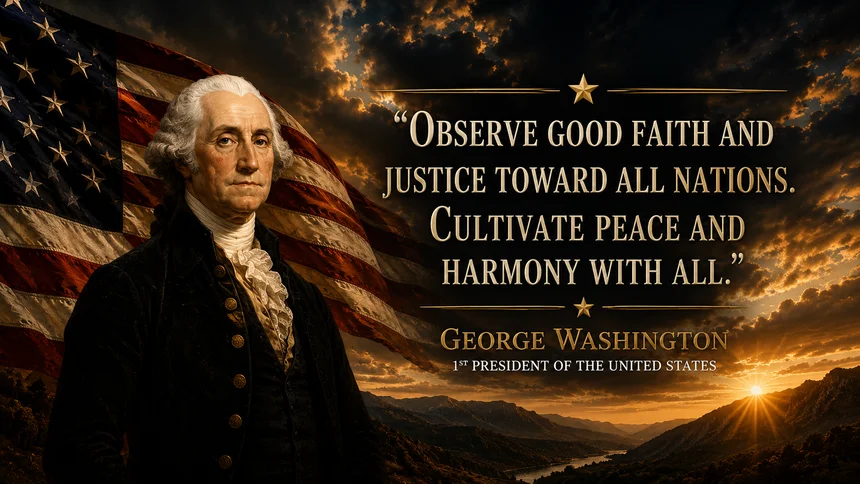
In his 1796 Farewell Address, Washington urged Americans to “observe good faith and justice towards all nations” — and, at home, warned against the spirit of party, which he called the people’s “worst enemy,” capable of opening the door to foreign influence and domestic tyranny. Read those passages today and they land like a diagnosis written two centuries in advance.
What George Washington Would Recognize Today
As a physician, I am trained to compare the patient in front of me against the baseline of health. Washington is our constitutional baseline. Measured against him, the present is not encouraging:
- He subordinated the military to civilian law. Today, former officials publicly coach the chain of command on which orders to anticipate resisting — a pattern I examined in The Most Dangerous Video in America.
- He surrendered power on schedule. Today, a permanent political class treats office as a tenured entitlement.
- He warned that party spirit would eclipse love of country. Today, partisan loyalty is the entire public identity of millions — a sickness I documented in Democrats’ War on America.
The comparison is not nostalgia. It is calibration. A people that forgets what right order looks like will accept anything.
I write this as a physician and as a naturalized citizen, and I will tell you plainly which of those credentials matters more here. The physician in me knows how to read a deteriorating chart. But it is the immigrant in me — the man who once watched a country’s institutions hollowed out from within while its people assured each other that everything was normal — who recognizes the urgency. George Washington is not a marble abstraction to me. He is the standard of conduct that made it possible for a refugee from tyranny to become a free citizen of a constitutional republic. I do not intend to watch that standard dissolve politely.
Giants Still Speak — If We Listen
I came to this country by choice, took its oath by choice, and study its founders by choice — because I have seen what nations become when their founding restraints are dissolved. George Washington’s six stars commemorate a man who proved that the surest hands for power are the ones willing to let it go.
Common Sense 2.0 — A BBB (Big Beautiful Book) devotes its early chapters to Washington’s generation and the constitutional architecture they built. If this essay stirred something, order the book on Amazon, browse the rest of the blog, and join our community of patriots through the newsletter below.
Washington could have been king, and chose to be a citizen. Every generation since has been spending the inheritance of that choice. It is time we started replenishing it.