
By Dr. Sassan Kaveh
The Federalist Papers are the instruction manual of the American republic — eighty-five essays written in ten months by Hamilton, Madison, and Jay to explain exactly how the Constitution was designed to work. Most of today's political confusion comes from never having read them.
In the autumn of 1787, three men — Alexander Hamilton, James Madison, and John Jay — sat down to write a series of newspaper essays arguing for the ratification of the proposed Constitution. They published under a single pseudonym, "Publius." Over the next ten months they produced eighty-five essays, totaling some 175,000 words. We know them today as The Federalist Papers, and they remain the single most important commentary on the Constitution ever written.
Most Americans have never read them. Many who have only encountered them as scattered quotations in a political science textbook. That is a tragedy. The Federalist Papers are the actual instruction manual for the constitutional republic in which we live. To read them is to step inside the minds of the men who designed the system — to see what problems they were solving, what dangers they feared, and what safeguards they thought they were building.
Why The Federalist Papers Were Written
In 1787, the proposed Constitution was not popular. The Articles of Confederation, weak as they were, had at least preserved state sovereignty. Anti-Federalists feared that a stronger federal government would become tyrannical. The state ratifying conventions were closely divided. Without ratification by nine states, the new Constitution would be a dead letter.
Hamilton conceived the essay series as a sustained argument in favor of ratification, specifically aimed at the New York convention. Madison joined him and quickly emerged as the most penetrating analyst of constitutional structure. Jay contributed five essays before illness forced him to withdraw. The essays appeared in three New York newspapers from October 1787 through August 1788 and were reprinted across the country.

The Essays Every American Should Read First
Eighty-five essays is a long reading list. For the busy citizen, here are the indispensable ones:
- Federalist No. 10 (Madison) — On factions. Why a large republic better controls the dangers of majority faction than a small democracy. This essay alone repays the price of any edition.
- Federalist No. 51 (Madison) — On checks and balances. "If men were angels, no government would be necessary." The clearest statement ever written of why we have a separation of powers.
- Federalist No. 39 (Madison) — Defines the republican form of government and explains why the new Constitution conforms to it.
- Federalist No. 70 (Hamilton) — On the executive. Why energy in the executive is essential to good government, and why a single chief executive is preferable to plural executives.
- Federalist No. 78 (Hamilton) — On the judiciary. The classic statement of judicial review and why the courts must be independent.
| Essay | Author | The Question It Answers |
|---|---|---|
| No. 10 | Madison | How does a large republic tame faction without crushing liberty? |
| No. 51 | Madison | Why separation of powers — "if men were angels, no government would be necessary" |
| No. 39 | Madison | What exactly makes a government republican and federal at once? |
| No. 70 | Hamilton | Why one energetic executive beats a committee |
| No. 78 | Hamilton | Why judges serve on good behavior and may strike down laws |

What The Federalist Papers Actually Teach
Strip away the eighteenth-century prose and the Federalist Papers teach four propositions that the modern reader desperately needs:
First, that human nature does not change. Madison's argument about factions in Federalist No. 10 — that the causes of faction are sown in the nature of man and cannot be removed, only controlled — is not eighteenth-century pessimism. It is realism. Every modern political debate vindicates Madison.
Second, that institutional design matters more than the virtue of officeholders. The whole purpose of the constitutional structure is to make ambition counteract ambition, so that bad men in office cannot do as much damage as they would in an unchecked system. We have forgotten this. We elect saviors and are surprised when they govern like ordinary politicians.
Third, that energy and stability are not opposites. Hamilton on the executive in Federalist No. 70 is a corrective to anyone who thinks limited government means weak government. The Constitution designed a government strong enough to defend the nation, restrained enough to leave citizens alone.
Fourth, that the Constitution is a structure, not a wish list. Madison and Hamilton designed a system in which the structure does the work of liberty, not the good intentions of the people in power. That is why amendments to the Constitution are deliberately difficult. That is why the federal government has only enumerated powers. That is why we still live under the system they built.
How Publius Answered The Anti-Federalists
The Federalist Papers were not written into a vacuum; they were one side of the most consequential public argument in American history. Anti-Federalist writers — publishing as Brutus, Cato, and the Federal Farmer — warned that the new federal government would swallow the states, that a standing army would menace liberty, and that a distant capital would grow indifferent to the people it taxed. These were serious men making serious arguments, and it is worth admitting something the modern curriculum rarely does: on several points, the Anti-Federalists' predictions look uncomfortably prophetic.
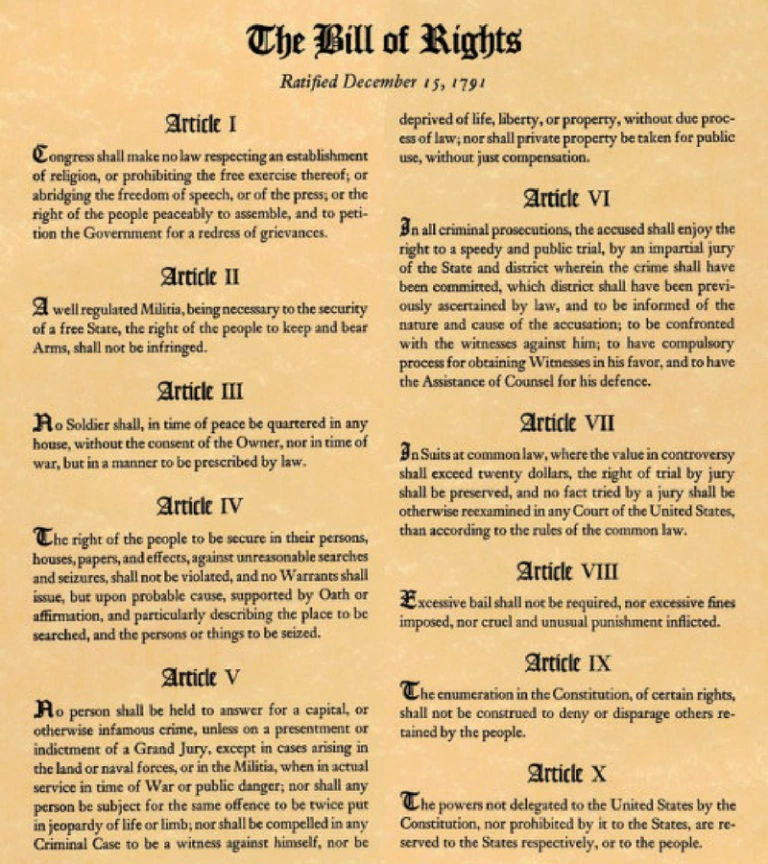
Publius answered not by denying the danger of power but by engineering against it — separation of powers, federalism, enumerated authority, staggered terms, an independent judiciary. And the debate itself produced a dividend neither side planned: the Bill of Rights, demanded by the Anti-Federalists as the price of ratification. Read both sides and you inherit the full argument, not the highlight reel. The Library of Congress maintains an excellent guide to the full text of every essay.
Federalist No. 68 And The Presidency
One essay has particular currency right now: Hamilton's No. 68, on the mode of electing the president. I examined its argument at length in my essay on the Electoral College — the design it defends is the same one under organized attack today. Publius, as usual, got there first.
A Physician's Recommendation
In medicine, we have a rule: read the primary literature, not the summaries. A peer-reviewed article tells you what was actually found. A press release tells you what someone wanted you to think was found. The Federalist Papers are the primary literature of the American constitutional order — as Paine's Common Sense is the primary literature of independence itself. The talking-head summaries of "what the Founders meant" are the press releases. Read the primary literature.
The full text is freely available at the Avalon Project and elsewhere. There is no excuse not to read them. I explain in Common Sense 2.0 why this matters more in 2026 than it has at any time since 1787.
A practical note, because the length deters people: you do not read the Federalist Papers the way you read a modern book. Each essay was a newspaper column, written to be finished over breakfast — most run fifteen to twenty-five minutes aloud. Read one a night and you will finish the entire canon in a season. Read the five I listed above and you will already understand the constitutional order better than most of the people paid to opine about it. The prose is eighteenth-century; the problems — faction, ambition, demagoguery, the concentration of power — are this morning's headlines.
Get The Book That Goes Deeper
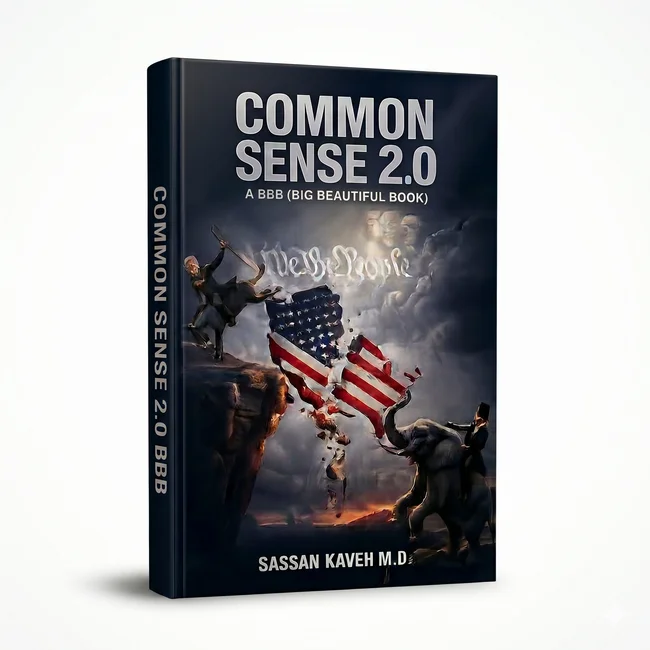
If this essay resonated, my book — Common Sense 2.0 — A BBB (Big Beautiful Book) — examines the founding ideas, the constitutional architecture, and the present moment in greater depth. It is written for readers who believe that self-government requires honest analysis, that power must answer to truth, and that no political party is entitled to blind trust.
Frequently Asked Questions
Who Actually Wrote Which Essays?
Hamilton wrote about 51 of the 85 essays, Madison about 29, and Jay 5. A handful are jointly attributed or disputed. The numbering system is consistent across reputable editions, and most editions identify the author of each essay.
Are The Federalist Papers Legally Binding?
No, but the Supreme Court has cited them more than any other source other than the Constitution itself when interpreting the meaning of constitutional clauses. They are not law, but they are the most authoritative window into what the law was understood to mean by its drafters.
Where Should A First-time Reader Start?
Read Federalist No. 10 first. Then Federalist No. 51. Those two essays in succession will change how you understand every modern political argument. From there, read whichever essays match your interests — executive power, judicial review, federalism, taxation. The whole series is searchable.
— Dr. Sassan Kaveh · physician · author · American by choice. Read more at commonsense2point0.com and join our community of patriots.