
By Dr. Sassan Kaveh
American Exceptionalism is not a boast — it is a structural description. The United States is the only nation founded on a written argument about legitimate government, and that founding still separates it from every other country on earth.
American Exceptionalism is one of the most misunderstood phrases in modern political discourse. To its critics, it sounds like a boast — the United States is better than everyone else and proud of it. To its careless defenders, it sounds like a slogan to be invoked whenever American conduct is criticized. To the men who first used the phrase, it meant neither. It meant that the United States is structurally, philosophically, and historically different from any other nation that has ever existed. That difference is a fact. Whether we are worthy of it is a question.
I write this as an immigrant. I did not inherit America by birth. I chose it. I crossed an ocean to become an American, and I have spent thirty years practicing medicine here. That perspective shapes what I am about to argue. American Exceptionalism is not the casual confidence of a person who has never seen another country. It is the considered judgment of a person who has — and chose this one.

What American Exceptionalism Actually Means
The phrase is sometimes traced to Alexis de Tocqueville, who in 1840 wrote that the position of the Americans was "quite exceptional." Tocqueville did not mean superior in every metric. He meant structurally different — different in religious composition, different in economic organization, different in political habits, different in the relationship between the individual and the state.
Three things in particular set the United States apart at its founding and continue to set it apart today:
- A founding on ideas, not blood. Most nations are founded on shared ethnicity or shared monarchy. The United States was founded on a written argument — the Declaration of Independence — about what government is for. To be American has always been, in principle, a matter of accepting that argument.
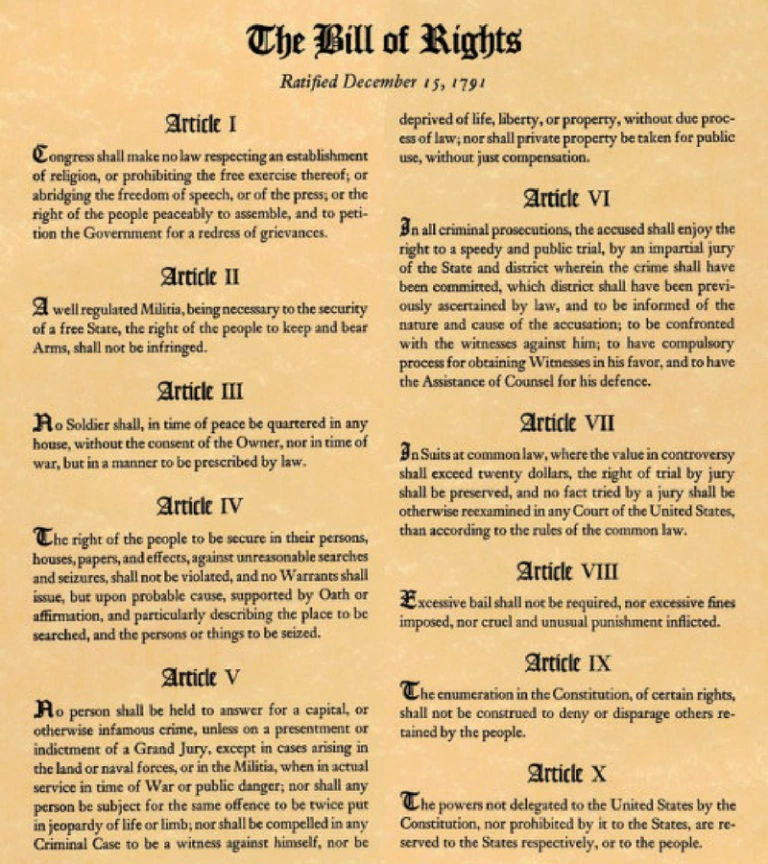
- A constitutional government of enumerated powers. The federal government has only the powers the Constitution gives it. Every other power belongs to the states or to the people. This is the inverse of how most national governments operate.
- A culture of voluntary association. Tocqueville observed that Americans, faced with a problem, formed a committee. Churches, lodges, mutual aid societies, charitable organizations, schools. The American instinct was to solve problems through civil society first and government second.
| Pillar | The Founding Form | The Modern Pressure |
|---|---|---|
| Founded on ideas | Membership by accepting the Declaration's argument | Reframing America as defined by its sins, not its principles |
| Enumerated powers | Washington does only what the Constitution names | Administrative agencies legislating without the legislature |
| Voluntary association | Churches, lodges, mutual aid, barn raisings | The state expanding into the space civil society once filled |

Why Ideas-as-foundation Matters
Consider what it means that the United States was founded on an argument. Every other nation has a story that begins with "we are the people who lived here, descended from these ancestors, ruled by this dynasty." The United States has a story that begins with: "We hold these truths to be self-evident." The American claim was not "we are special because of our blood." It was "we are special because of our claims about the nature of legitimate government."
That is why immigration is so deeply built into the American identity. If America is founded on an argument, then anyone who accepts the argument can become American. This is what I mean when I say "American by choice". It is not a slogan. It is a description of how membership in this nation actually works.

Why This Difference Is Fragile
The three pillars I described — ideas-based founding, enumerated powers, voluntary association — are not self-sustaining. Each of them is under pressure from forces that would replace them with something else.
The ideas-based founding is under pressure from movements that want to reframe the United States as an oppressor nation defined by its sins rather than its principles. The enumerated-powers structure is under pressure from administrative agencies that act with the force of law without explicit constitutional authority. Voluntary association is under pressure from a state that has expanded to fill the space where civil society used to operate.
To defend American Exceptionalism, you have to defend each of these three pillars. That is what I argue, in depth, in Common Sense 2.0.

The Evidence: Watch The Direction Of The Boats
Skeptics of American Exceptionalism deserve an answer grounded in observable reality, so here is the simplest one I know: watch the direction of the boats. For two and a half centuries, human beings have risked everything — oceans, deserts, razor wire, the open sea on inner tubes — to get into this country. There is no comparable migration toward any of the regimes offered as alternatives. People do not flee toward tyranny. The revealed preference of the world's poor and persecuted is the most honest referendum on the American difference ever conducted, and it is renewed every single day.
The founding document those migrants are voting for, whether they have read it or not, is the Declaration of Independence — the argument that rights precede government and that government exists to secure them. Thomas Paine put the same case in plainer words a few months earlier, as I recount in my essay on Common Sense. The argument, not the geography, is the exception.
There is a ceremony that makes the point better than any statistic. When a new citizen is naturalized, he does not swear loyalty to a people, a party, or a leader. He swears to support and defend the Constitution of the United States. I have taken that oath. In how many other nations is membership conferred by embracing an argument about limited government? The answer is none — which is precisely what the word "exceptional" was coined to describe.
The Test Every Generation Faces
Tocqueville warned that democratic peoples drift toward a soft, managing despotism unless their habits of self-government are actively renewed — his two-volume study is free to read at Project Gutenberg and remains the sharpest outside diagnosis of the American character ever written. Every generation either re-earns the three pillars or watches them erode politely. There is no neutral gear.
A Doctor's-eye View
In medicine, we learn that the diseases that kill a patient most efficiently are the ones the patient does not feel. A blood pressure of 200/110 is silent. A blockage of the carotid artery is silent until the day of the stroke. The patient who feels well is not the same as the patient who is well. America today feels generally well. The metrics that matter — civic literacy, constitutional understanding, the strength of voluntary associations, the ratio of self-reliance to dependence — tell a different story. The early-warning signs of structural failure are present. They are not yet emergencies. They are still treatable.

Get The Book That Goes Deeper
If this essay resonated, my book — Common Sense 2.0 — A BBB (Big Beautiful Book) — examines the founding ideas, the constitutional architecture, and the present moment in greater depth. It is written for readers who believe that self-government requires honest analysis, that power must answer to truth, and that no political party is entitled to blind trust.
Frequently Asked Questions
Is American Exceptionalism A Religious Idea?
Some of the rhetorical force of the phrase has religious roots — Winthrop's "city upon a hill" sermon, for instance. But the core constitutional argument is a philosophical and structural one. You do not have to be religious to recognize that a nation founded on enumerated powers and individual rights is structurally different from one founded on hereditary monarchy or ethnic identity.
Doesn't American Exceptionalism Ignore America's Failures?
No. Honest defenders of the term insist on the opposite: that America is to be judged by its founding principles, including in those moments when it has failed to live up to them. Slavery was a failure to live up to the Declaration. The Civil Rights movement was a vindication of the Declaration's logic. The principle survives the failures. That is part of what makes it exceptional.
Why Does This Matter For Ordinary Americans Today?
Because the three pillars are not maintained automatically. A republic is a project, not a possession. Every generation either renews the founding ideas or lets them erode. The renewal is done not by politicians but by ordinary citizens who understand the argument and pass it on.
— Dr. Sassan Kaveh · physician · author · American by choice. Read more at commonsense2point0.com and join our community of patriots.